Healthcare Doctors — Woolloongabba Medical Centre

Healthcare Knowledge Centre

Mental Health

Clear, practical information about anxiety, stress, low mood, burnout and the role of general practice in mental healthcare.

Understanding Mental Health

Mental health is part of whole-person healthcare. General practice can provide a confidential starting point for discussing changes in mood, anxiety, sleep, stress, functioning or wellbeing, and can coordinate further support when needed.

Patients from Woolloongabba, East Brisbane and nearby inner-south communities can start with a GP when they are unsure what kind of mental health support may be appropriate.

Patient guides

Mental Health When Should I Speak To A GP About Anxiety? Learn when anxiety may be worth discussing with a GP, what an appointment may cover and how general practice can connect you with appropriate support. Read patient guide → Mental Health Anxiety vs Stress: What Is The Difference? Understand common differences between stress and anxiety, where they overlap and when a GP review may help. Read patient guide → Mental Health What Happens During A Mental Health Care Plan? A practical guide to what a GP mental health assessment and treatment planning appointment may involve in Australia. Read patient guide → Mental Health How Can A GP Help With Depression? Learn how a GP can assess low mood and depression, discuss treatment options, coordinate referrals and provide ongoing follow-up. Read patient guide → Mental Health When Should I Seek Help For Burnout? Recognise when prolonged stress and burnout symptoms may benefit from a GP review and what support general practice can provide. Read patient guide →

Educational overview

Mental wellbeing and everyday life

Mental wellbeing can sit alongside sleep, physical health, everyday routines, work or study, and relationships. These areas may interact differently for each person.

A GP can listen to concerns and discuss appropriate professional support. The topics below are a starting point for that conversation, not a list of symptoms that applies to everyone.
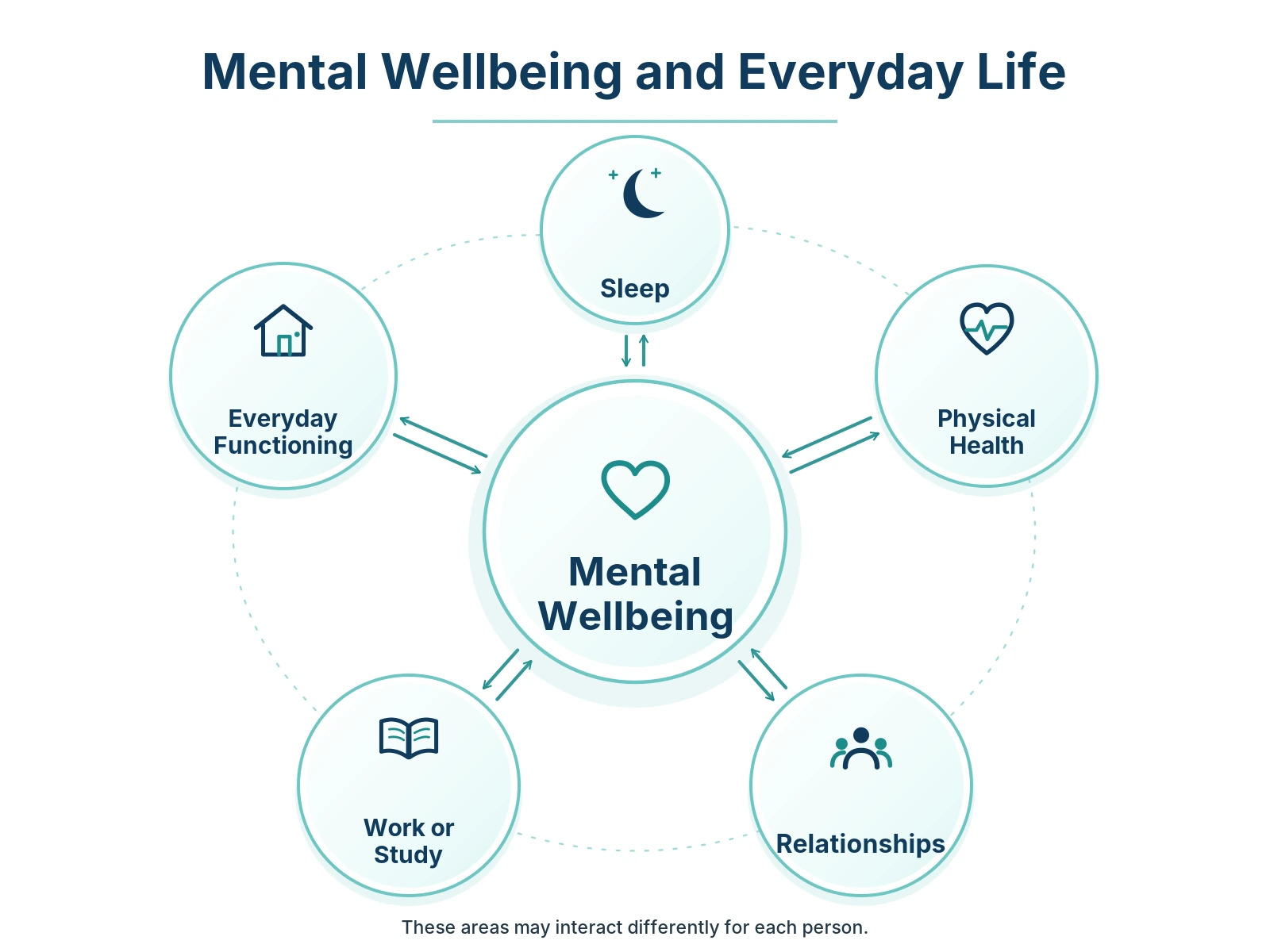
Diagram titled Mental Wellbeing and Everyday Life, linking mental wellbeing with sleep, physical health, everyday functioning, work or study, and relationships.
Educational diagram of mental wellbeing and everyday life.
  • Sleep and rest. You can discuss your sleep, rest and daily energy.
  • Physical health. Talk about physical health and everyday wellbeing.
  • Relationships and support. Share what connections and support mean to you.
  • Work or study. Discuss your routines and responsibilities.
  • Everyday activities. Talk about the things that matter in daily life.

Everyone's experience is different.

Read the mental health patient guides

Consultation checklist

What to expect during a GP mental health conversation

A GP conversation is individual. You can talk about concerns that matter to you, and about everyday life, including routines, relationships, rest or work. You can ask how privacy works and where its limits are.

If you or someone else is in immediate danger, call 000.

  1. Share your concernsTalk about concerns that matter to you.
  2. Talk about everyday lifeDiscuss routines, relationships, rest or work.
  3. Ask about privacy and confidentialityYour GP can explain how privacy works and its limits.
  4. Discuss professional support optionsExplore support options that may suit your needs.
  5. Plan follow-up conversationsDiscuss whether and when to meet again.

You can bring notes and ask questions. Every conversation is individual.

Read about a mental health appointment

Read what happens during a mental health care plan

Privacy & Confidentiality

Related care at Woolloongabba Medical Centre

Need support?

Our team provides mental health consultations for patients across Woolloongabba and Brisbane's inner south.

Book Appointment, or call reception if you need help choosing the most appropriate appointment type or practitioner.

This page provides general educational information and does not replace individual medical advice. Call 000 for a life-threatening emergency.