
About this topic
Understand blood pressure readings, cardiovascular risk, cholesterol and preventive checks.
These patient guides are for general information. If symptoms are severe or rapidly worsening, seek appropriate urgent medical advice.
Patient guides
Educational overview
How blood circulates
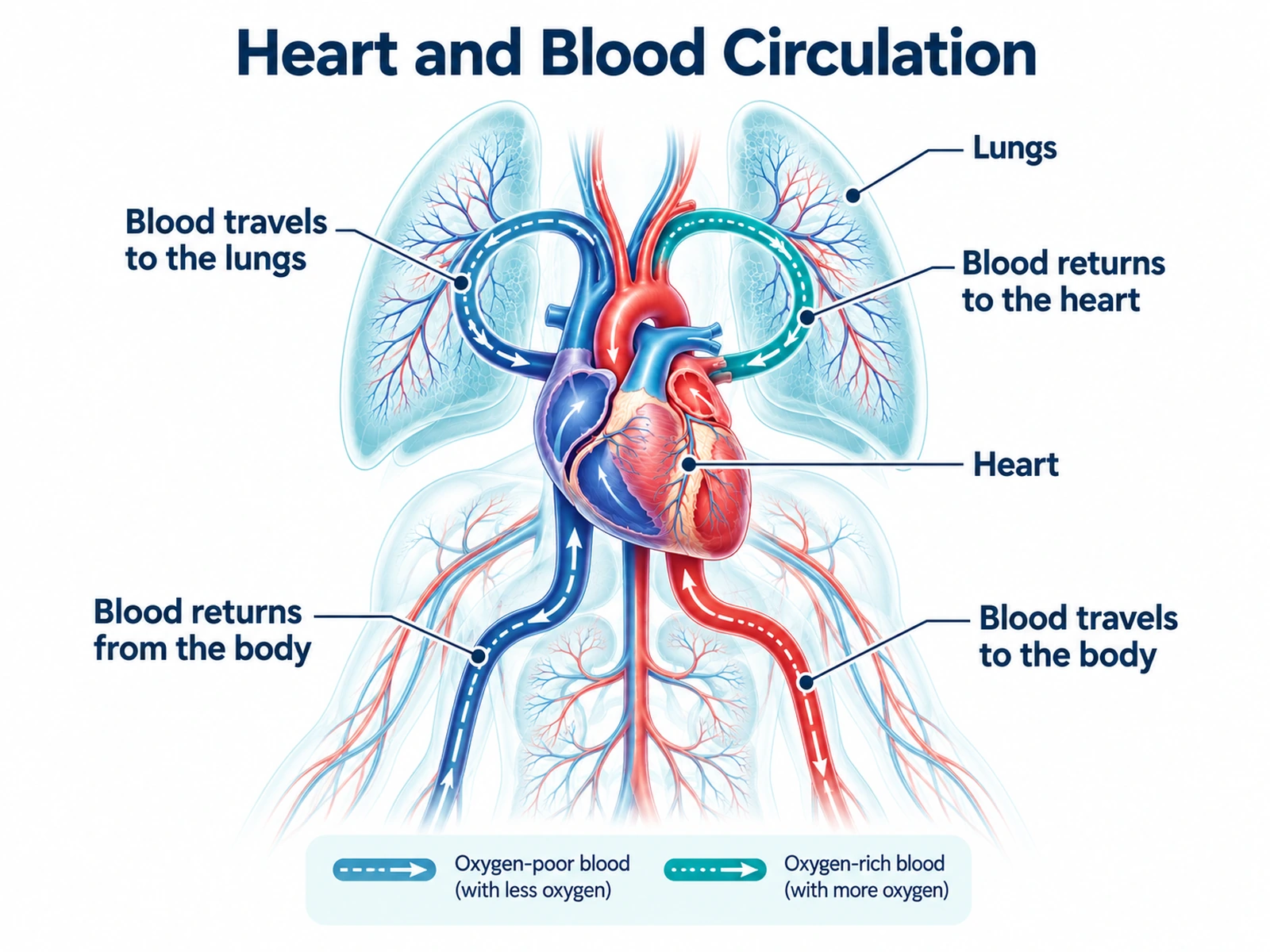
In usual circulation, blood returning from the body is pumped to the lungs. It receives oxygen in the lungs and returns to the heart. The heart then pumps that oxygen-rich blood around the body.
Blood travelling to the lungs, and blood returning from the body, carries less oxygen. Blood leaving the lungs and travelling out to the body carries more oxygen. The arrows in the diagram show the direction of flow.
Frequently asked questions
When should I see a GP about blood pressure or heart risk?
Book if readings are repeatedly high, you have new chest discomfort, breathlessness, palpitations, or you need a planned heart health check. Bring home readings if you have them.
Can a normal ECG rule out every heart problem?
No. An ECG is one test at one point in time. Your GP interprets it with symptoms and history — see also our ECG service page.
What should I do for severe chest pain now?
Do not wait for a routine appointment. Call Triple Zero (000) for severe or life-threatening symptoms.
How are heart checks linked to chronic disease care?
Blood pressure, cholesterol and lifestyle risks are often reviewed within ongoing chronic care. Related service: Chronic Disease Care.
Need support?
Book a heart health check.
Our team supports patients from Woolloongabba and Brisbane’s inner south with relevant primary-care consultations.
This information is educational and is not a substitute for individual medical advice. Call 000 for life-threatening emergencies.