Healthcare Doctors — Woolloongabba Medical Centre

Healthcare Knowledge Centre

Diabetes & Ongoing Care

Type 2 diabetes, monitoring, daily management, complication prevention and care plans.

About this topic

Type 2 diabetes, monitoring, daily management, complication prevention and care plans.

These patient guides are for general information. If symptoms are severe or rapidly worsening, seek appropriate urgent medical advice.

Patient guides

Patient guideUnderstanding Type 2 DiabetesA diagnosis of type 2 diabetes can raise many questions. Understanding what the diagnosis means and how it is monitored can help.Read patient guide →Patient guideLiving With DiabetesLiving with diabetes involves ordinary routines as well as medical appointments. A workable plan should fit your health needs, l.Read patient guide →Patient guideDiabetes Monitoring ExplainedDiabetes monitoring is about protecting health over time, not simply recording one glucose number. Different tests look at diffe.Read patient guide →Patient guidePreventing Diabetes ComplicationsThe purpose of long-term diabetes care is to reduce avoidable complications while supporting quality of life. Small, realistic c.Read patient guide →Patient guideDiabetes Care Plans ExplainedFor some people, coordinating diabetes care is as important as choosing medicines. A GP chronic condition management plan may he.Read patient guide →

Related existing guides

Educational overview

How the body uses glucose

Glucose is a type of sugar the body uses for energy. In usual digestion, carbohydrates in food are broken down in the stomach and small intestine. Glucose is absorbed into the bloodstream and travels through the body.

When blood glucose rises after eating, the pancreas releases insulin. Insulin helps glucose move from the bloodstream into body cells. Inside cells, glucose can be broken down to release the energy used for everyday functions such as muscle movement, brain activity and organ function.

This is a simplified explanation of usual glucose use. It does not describe a personal diabetes plan, a target result, or a treatment.

In diabetes, a review looks at more than one glucose result. It can also cover health history, overall health, and when to meet again.
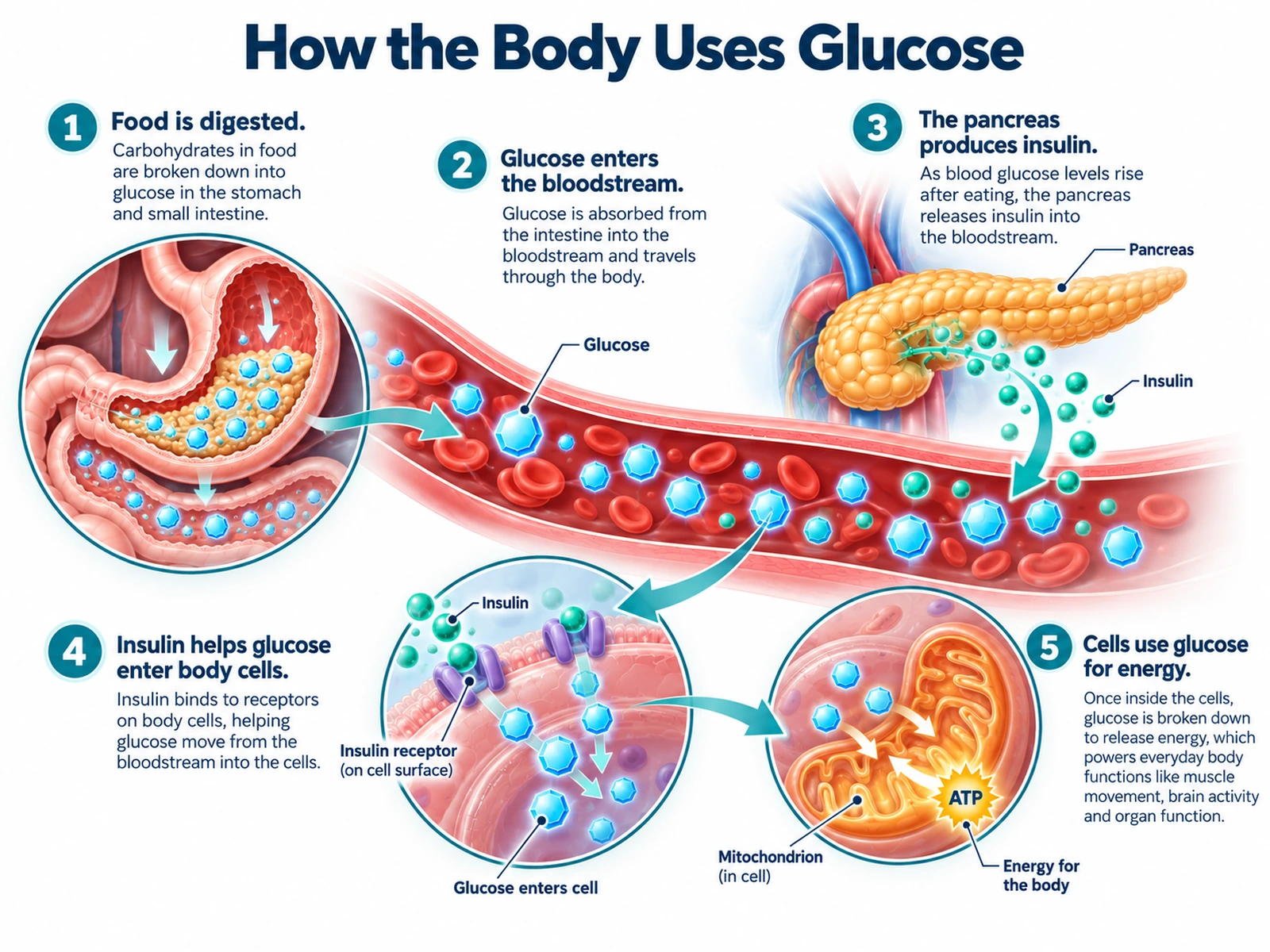
Diagram titled How the Body Uses Glucose, showing digestion, glucose entering the bloodstream, insulin from the pancreas, glucose entering a cell through a receptor, and energy released in a mitochondrion.
Educational diagram of how the body uses glucose.

Simplified educational illustration.

Read the diabetes patient guides

Consultation checklist

Your diabetes healthcare review

Ongoing diabetes care is coordinated around you and your GP. Depending on your needs, a review may bring together your health history and results, your overall health, practice nursing, relevant allied healthcare professionals, and the timing of future appointments.

The support you receive may vary. The checklist below is a guide to what a review can cover. It is not a promise that every item applies to every appointment.

  1. Discuss your concernsTalk with your GP about your health, lifestyle and any questions you have.
  2. Review results and historyYour GP will look at relevant test results, your medical history and your overall health.
  3. Consider overall healthYour GP will take a whole-of-health approach, considering your physical, mental and social wellbeing.
  4. Coordinate care when neededYour GP can work with other healthcare professionals to support your ongoing care, if needed.
  5. Discuss questions and prioritiesShare what matters to you and discuss any questions you have.
  6. Plan follow-upTogether, you can plan your next steps, including when to have your next review.

Your healthcare review will depend on your individual needs.

See the diabetes review journey

Frequently asked questions

When should I see a GP about diabetes or blood sugar concerns?

Book a review for new symptoms such as thirst, frequent urination, unexplained weight change, or if home readings are outside the range your clinician advised. Bring recent results and a medicines list when you attend.

What happens in a diabetes care plan review?

Your GP reviews control, medicines, complications screening and supports such as nursing or allied health. Plans are individual — see our diabetes guides and Chronic Disease Care service page.

Is diabetes education a substitute for personal medical advice?

No. These pages explain common concepts only. Your clinician interprets results and treatment for your circumstances.

When is blood sugar an urgent problem?

Seek urgent care for severe symptoms such as confusion, vomiting with high readings, or suspected very low blood sugar that does not respond to usual treatment. Call 000 for a life-threatening emergency.

Relevant care and practitioners

Learn about the related service and the general practitioners whose verified public profiles describe relevant areas of interest.

Need support?

Book a diabetes healthcare review.

Our team supports patients from Woolloongabba and Brisbane’s inner south with relevant primary-care consultations.

This information is educational and is not a substitute for individual medical advice. Call 000 for life-threatening emergencies.