
Introduction
Queensland’s climate can make sun exposure feel like part of ordinary daily life, but ultraviolet radiation is not determined by temperature. Protection is important when UV levels are high enough to damage unprotected skin.
Why This Topic Matters
In Queensland, UV exposure can be high even when the weather feels mild. Protection is recommended whenever the UV index is 3 or higher; the goal is to reduce cumulative exposure, not avoid outdoor activity altogether.
Signs, Symptoms or Situations to Recognise
Choose shade, protective clothing, a broad-brimmed hat, sunglasses and suitable sunscreen applied according to the label. Swimming, sweating and towel-drying may reduce protection and require reapplication.
- You have had severe sunburn or repeated high UV exposure.
- You have noticed a new or changing skin lesion.
- You need advice about sun protection for children or sensitive skin.
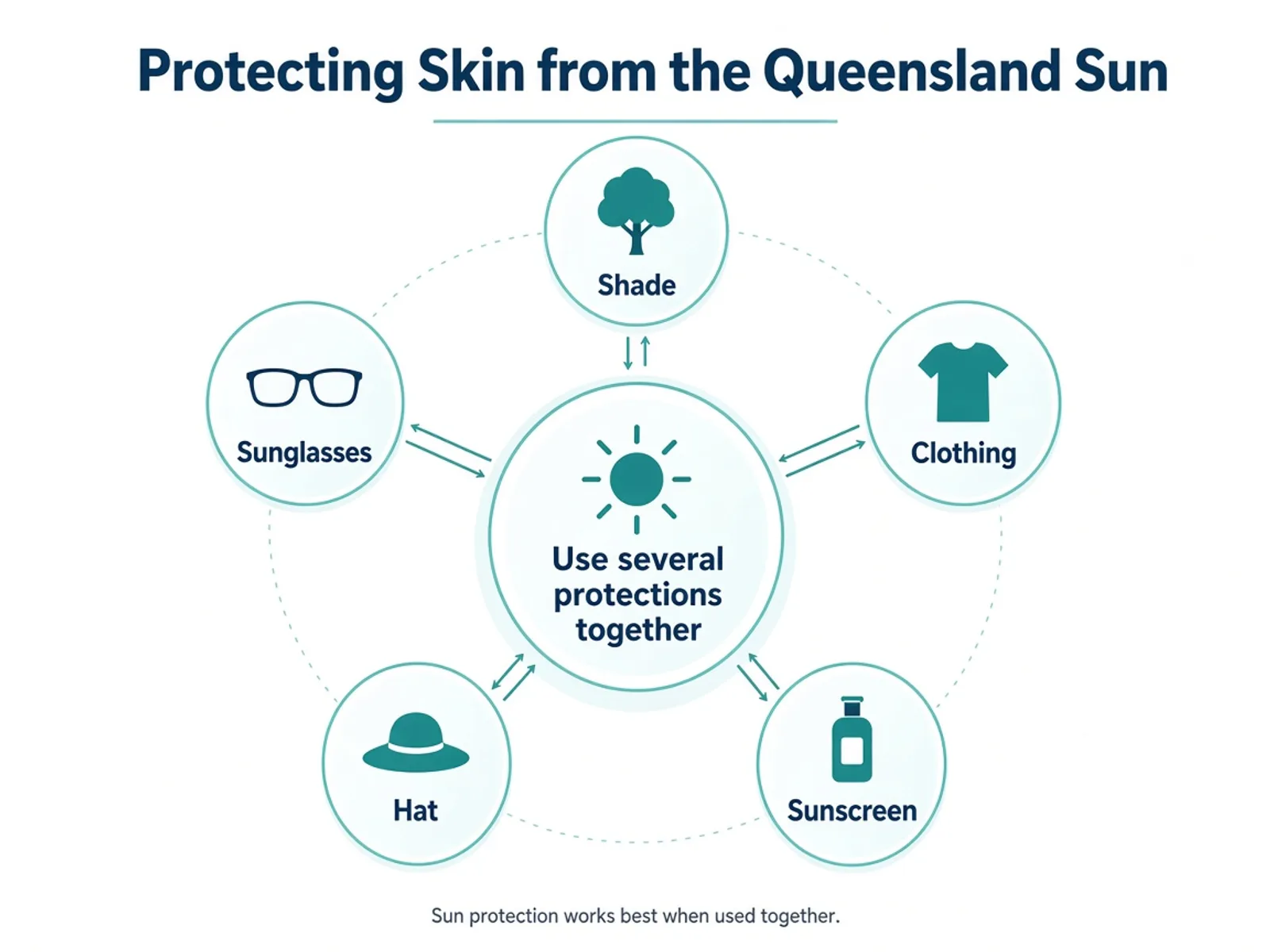
Use several forms of sun protection together
Cancer Council recommends combining protective clothing, broad-spectrum water-resistant SPF50 or SPF50+ sunscreen, a broad-brimmed hat, shade and sunglasses. Sunscreen should complement, not replace, clothing and shade.
Check the daily UV level and plan outdoor activity around it when possible. Reapply sunscreen according to current guidance, especially after swimming, heavy sweating or towel drying.
- Cover skin with protective clothing
- Use broad-spectrum water-resistant SPF50 or SPF50+ sunscreen
- Wear a broad-brimmed hat and sunglasses
- Seek shade
- Check your skin regularly for new or changing spots
When Should I Seek Medical Advice?
See a GP if you notice a new or changing lesion, a sore that does not heal, repeated bleeding or another skin change that concerns you. Sun protection reduces risk but does not remove the need to assess suspicious spots.
How Can a GP Help?
A GP can assess sun-related skin changes, discuss personal skin cancer risk, perform or arrange skin checks where appropriate and advise on further investigation or treatment.
For patients living and working around Woolloongabba, South Brisbane and Greenslopes, sun protection and skin awareness are relevant throughout much of the year.
Frequently Asked Questions
Is sunscreen enough by itself?
No. Sunscreen works best as one part of a broader sun-protection approach including clothing, hats, shade and sunglasses.
Does UV risk depend on temperature?
No. UV radiation is not the same as heat, so damaging UV can be present on cooler or cloudy days.
Should I still check my skin if I use sun protection?
Yes. Sun protection reduces future exposure, while skin awareness helps you notice changes that may need assessment.
Trusted Australian information
For further general information, these national health resources may be useful.
Need support?
Our team provides skin checks consultations for patients across Woolloongabba and Brisbane's inner south.
Use the related service and practitioner information above, then use Book Appointment, or ask reception to help you choose an appropriate appointment.
Medical information disclaimer: This article is general educational information only. It does not diagnose a condition or replace advice from a qualified healthcare professional who knows your history.